
Smartphone Price Trends Nepal 2026

Why Are Smartphone Prices Rising in 2026?
The short answer: memory chips. Smartphones need two types of memory to function RAM (which runs your apps) and NAND flash storage (which holds your photos, apps, and files). Global demand for these components has spiked, largely driven by AI companies buying up memory chips for data centers, and supply hasn’t kept pace.
According to Counterpoint Research, RAM prices rose roughly 50% quarter-on-quarter in early 2026, while NAND storage prices rose more than 90% in the same period. That’s an enormous jump in a short window, and it hits every phone regardless of RAM or storage size a 4GB budget phone and a 16GB flagship both got more expensive to manufacture.
In Nepal specifically, retail prices have risen an estimated 15 to 25 percent through 2026. The impact hasn’t been even across the market, though. Budget and low-margin brands like Realme, Xiaomi, Vivo, Infinix, and Transsion had almost no cushion to absorb the cost increase, so they passed most of it directly to buyers. Apple and Samsung, by contrast, had signed long-term component supply agreements in advance, which gave their flagship lines more protection from the immediate hit.
The timeline is also useful to know if you’re wondering why an old price list you saw online doesn’t match store prices today: hikes started in India and Indonesia around November 2025, Nepal’s market adjusted in December 2025, and by January 2026 most brands had updated their official Nepal pricing. If you’re comparing to a price you saw before that window, that’s the old price.
Nepal Smartphone Prices by Segment (Mid-July 2026 Snapshot)
Here’s where each major price tier sits right now, with a real example model and its currently listed authorized price:
| Segment | Price Range (NPR) | Example Model | Listed Price |
| Budget | Under 25,000 | Redmi 15C (4+128GB) | Rs. 19,999 |
| Mid-Range | 25,000 – 55,000 | Redmi Note 15 5G (8+256GB) | Rs. 43,999 |
| Premium Mid-Range | 55,000 – 100,000 | Nothing Phone (4a) Pro (12+256GB) | Rs. 93,999 |
| Flagship | Above 100,000 | Samsung Galaxy S26 Ultra (12+256GB) | Rs. 202,999 |
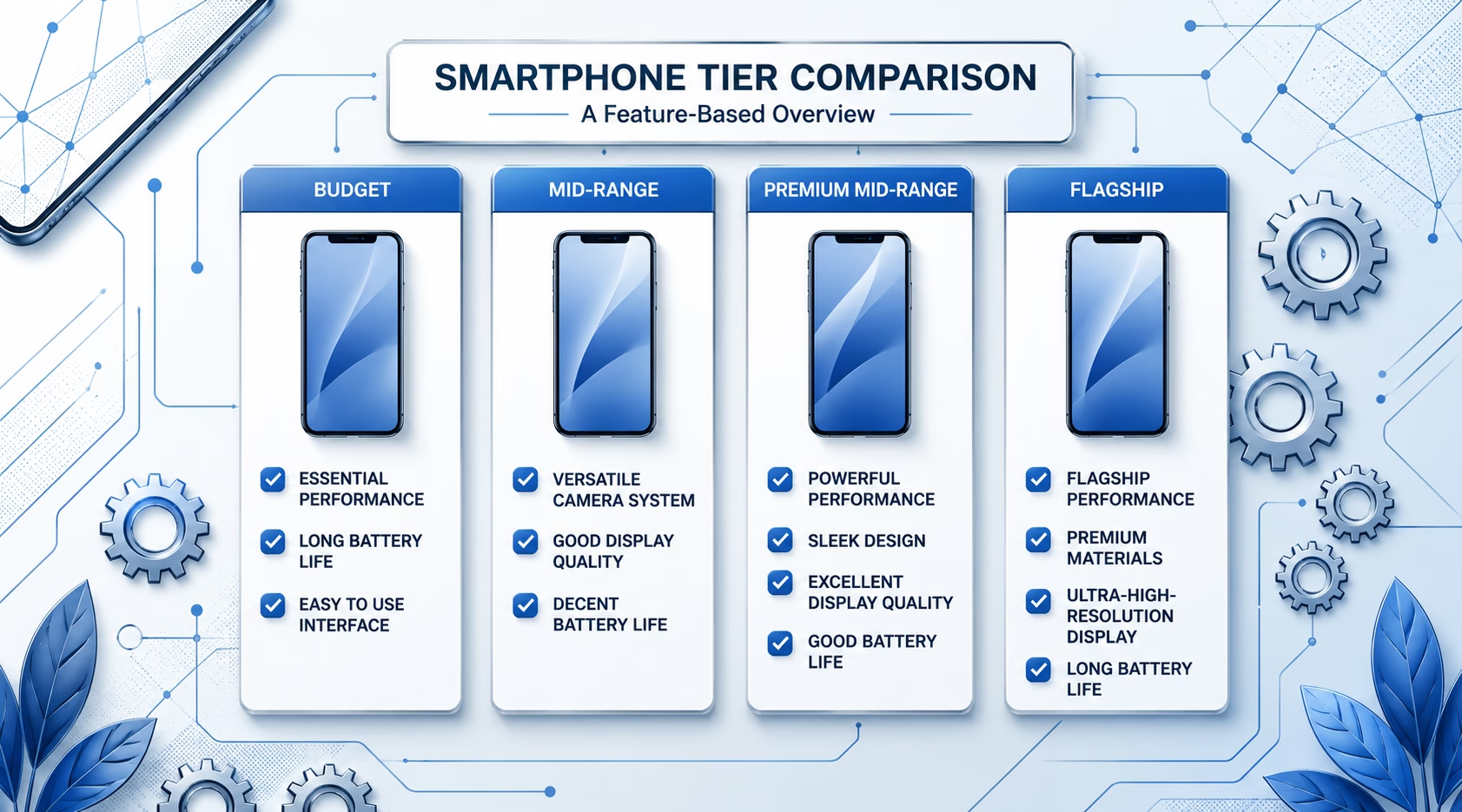
A few things worth noting about these tiers: budget phones (under NPR 25,000) are aimed at first-time buyers and casual users, and this is the segment that’s been hit hardest by the price hikes phones that used to sell under NPR 15,000 are now regularly crossing NPR 20,000. Mid-range phones (NPR 25,000-55,000) typically add OLED displays and stronger processors. Premium mid-range (NPR 55,000-100,000) gets you near-flagship performance high refresh-rate displays and flagship-grade chips without flagship pricing. Above NPR 100,000 is full flagship territory: Samsung’s Galaxy S series, Apple’s iPhones, and top-tier OnePlus, Xiaomi, and Vivo devices.
Budget-Tier Smartphone Lineup (Under NPR 25,000)

If you need a phone right now and want to stay under NPR 25,000, here’s what’s currently available from authorized distributors:
| Model | RAM + Storage | Price (NPR) | Notable For |
| Tecno Spark Go 2 | 3+64GB | Rs. 11,499 | Cheapest listed |
| Realme Note 70 | 4+64GB | Rs. 15,499 | Low entry price |
| Samsung Galaxy A07 | 4+64GB | Rs. 18,999 | 6 yrs software support |
| Redmi 15C | 4+128GB | Rs. 19,999 | 6.9″ display, 6000mAh |
| Honor X6c | 6+128GB | Rs. 23,499 | Larger RAM at this price |
Two quick notes on this list: the Samsung Galaxy A07 stands out for offering six years of promised software support at this price point, which is unusually long for the budget segment. The Redmi 15C’s large 6.9-inch display and 6000mAh battery make it a strong pick if you prioritize screen size and battery life for media consumption over raw performance.
Buying Tips for the Current Market
A few practical things to know before you buy in Nepal right now:
- Authorized vs. grey market: Authorized phones come with a valid VAT bill, an MPIA (Mobile Phone Importers Association) hologram on the box, and the authorized distributor’s seal. Grey market phones are cheaper but carry no official warranty and no VAT bill if something breaks, you’re on your own. With prices already elevated, the savings from grey market units are harder to justify against that risk.
- EMI is now widely available: Since early 2025, EMI (installment) buying has become common in Nepal. Many Android brands now offer 0% interest EMI, and you typically only need a citizenship document and a guarantor no credit card required. This has shifted buying behavior: many buyers now stretch their budget to a premium mid-range or flagship phone via EMI rather than buying mid-range outright.
- Check the software update policy: In 2026, Android phones typically ship with Android 15 or 16 depending on release timing. iPhones generally get longer software support windows than most Android devices, though some Android brands (like Samsung’s A07, noted above) are starting to offer multi-year commitments too.
- Time your purchase around sales: Online platforms like Daraz run major campaigns (11.11, festive sales) with coupon codes and discounts. Physical retail stores also allow room for bargaining, discounts, or bundled offers if you’re willing to compare a few shops.
- Only buy if you need to right now: Industry analysts expect memory-driven price pressure to continue through most of 2026, with no clear signal on when it eases. If your current phone is working fine and you’re not in urgent need, prices aren’t likely to drop soon but they’re also not guaranteed to rise further at the same pace. If you do need a phone now, buying from an authorized distributor and comparing 2-3 models in your segment remains the safest approach.
Smartphone prices in Nepal are up 15-25% in 2026 because of a global RAM and NAND shortage, not because of anything Nepal-specific. Budget phones have taken the biggest hit in percentage terms, while flagship pricing has been comparatively more stable thanks to manufacturers’ advance supply deals. If you’re shopping right now, stick to authorized distributors, check the segment table above for what a fair price looks like, and consider EMI only if your income can comfortably support the monthly payment.
Prices in this post are sourced from Gadgetbyte Nepal’s official distributor-listed prices, current as of mid-July 2026, along with pricing-trend data from Counterpoint Research as reported by Gadgetbyte Nepal and raj8.com.np. Smartphone prices change frequently — verify current pricing with an authorized distributor before purchase.