
Nepal Tech Hiring Trends 2026

Nepal’s IT Sector, By the Numbers
Nepal’s IT service exports were valued at about $303.9 million in 2021 and $515.4 million in 2022 a 64.2% jump in a single year according to the Institute for Integrated Development Studies (IIDS), which ran the first comprehensive nationwide study of the industry. That growth pushed IT exports from roughly 1% of Nepal’s GDP in 2020 to about 1.4% in 2022, and their share of the country’s foreign exchange reserves rose from about 2.9% to 5.5% over the same period.
By February 2026, the Nepal Association for Software and IT Services Companies (NAS-IT) estimated the sector had grown to roughly Rs 145 billion a year (around $1 billion) describing it as a “best estimate” rather than an audited figure, since a large share of freelancer and small-company earnings still arrives through remittance channels rather than being formally recorded as IT exports. Nepal Rastra Bank’s own balance-of-payments data showed a similar direction: IT services earnings in the first four months of fiscal year 2024/25 came to about Rs 6.69 billion, a 20.28% increase over the same period the year before.
On the ground, that growth shows up as: over 6,000 registered BPO companies, more than 60,000 freelancers and 106+ Nepali IT firms exporting services as of the last full IIDS count, roughly 124 new IT and BPO companies registered between 2024 and 2025 alone, and an estimated 100,000 people now employed in the sector. Women currently make up about 7.9% of Nepal’s IT workforce, according to NecoJobs’ 2026 analysis a gap the industry is being pushed to address as it scales.
The government is leaning into this. In its policy and programme announcement for fiscal year 2026-27, presented to parliament in May 2026, the government said it would introduce a formal legal framework for remote work letting Nepalis work from within the country for foreign employers and named software, digital services, cloud services, and cybersecurity as priority areas going forward.
Skills Employers Are Actually Hiring For in 2026
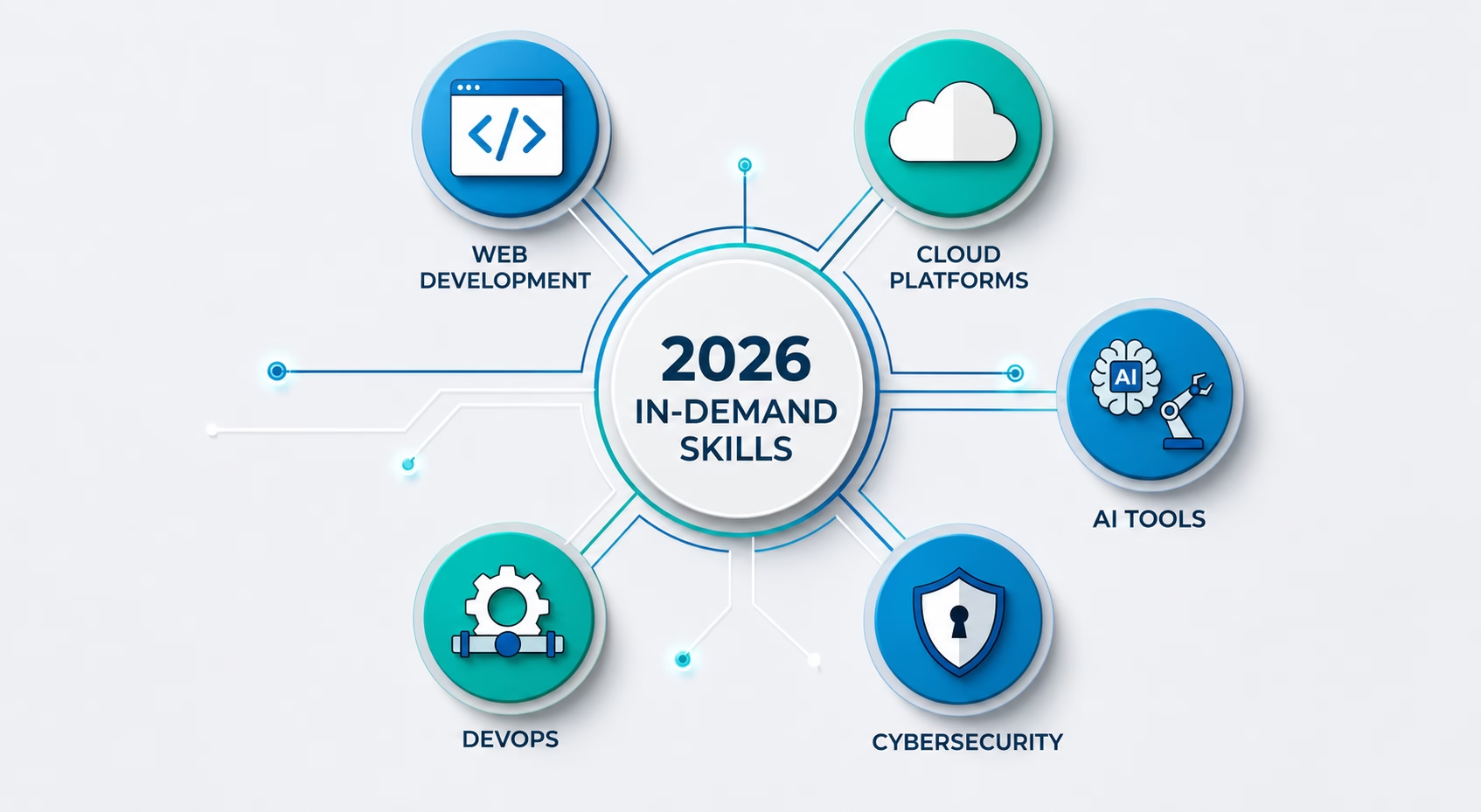
Based on job posting patterns and salary-growth data across multiple 2026 sources, a few skill areas stand out clearly:
- Full-stack web development (Laravel, React, and similar frameworks): Full-stack developers who can handle both front-end and back-end work are consistently reported as earning 10-30% more than single-focus developers, since they’re more versatile for outsourcing agencies and startups running lean teams.
- Cloud platforms (AWS, Microsoft Azure, Google Cloud): As more Nepali companies build for international clients, cloud infrastructure skills have become a standard expectation rather than a bonus, especially for .NET, backend, and DevOps roles.
- AI/ML and AI tool integration: Named specifically in the government’s FY 2026-27 priority list alongside cybersecurity and cloud services. On the freelance/remote side, AI/LLM integration work prompt engineering, AI tool integration, and fine-tuning experience is one of the fastest-growing categories of demand from international clients, according to Upwork demand data cited by Nepali remote-work guides.
- DevOps and cybersecurity: Both are named repeatedly across salary guides as high-growth, high-pay specializations, tied directly to the same outsourcing and cloud-migration demand driving the sector’s export growth.
- Certifications matter for credibility: AWS, Google Cloud, and CISSP certifications are frequently cited as helping developers stand out and negotiate higher pay, on top of (or sometimes instead of) a traditional CS degree.
What Nepali Developers Actually Earn (2026)
Salary data in Nepal’s tech sector varies significantly by source, city, and whether you’re counting local salaries or remote/international income so treat the numbers below as a realistic range rather than a fixed figure.
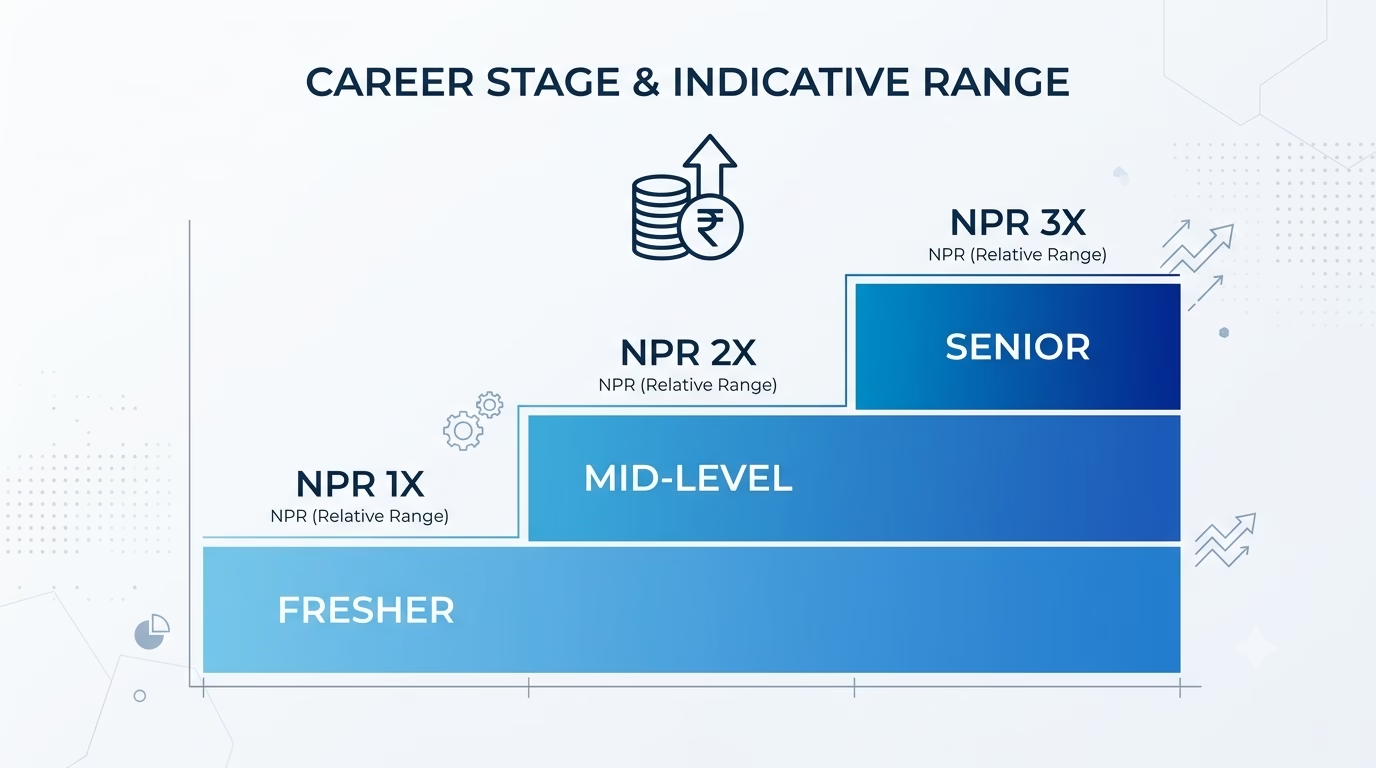
| Experience Level | Local Nepal Salary (Monthly, NPR) | Remote/International Clients (Monthly, NPR) |
| Fresher (0-1 yr) | 20,000 – 50,000 | Varies widely; USD 10-25/hr common starting rate |
| Mid-level (2-5 yrs) | 50,000 – 180,000 | 150,000 – 300,000+ |
| Senior / Full-Stack / Lead | 120,000 – 400,000 | 300,000 – 500,000+ |
A few points worth understanding about this spread: Kathmandu Valley pays the most locally simply because most companies are based there, but remote work is closing that gap developers in Pokhara, Biratnagar, or Butwal working for international clients can now match or exceed Kathmandu salaries without relocating. Specialization also matters a lot: senior cloud architects and AI engineers sit at the top of the local range (up to roughly NPR 400,000/month), while blockchain development, a smaller and more specialized niche, has been reported in the NPR 80,000-300,000 range.
Remote work for international clients remains the biggest income multiplier. Nepali freelance developer rates in 2026 are commonly reported at USD 10-25/hour for junior-to-mid level work and USD 25-50/hour for experienced practitioners, via platforms like Upwork. Separately, Arc a vetted global remote-developer network reports Nepal-based remote developers self-reporting an average expected salary of about $40,700/year (roughly NPR 5.4 million/year at current exchange rates), though this reflects a specific vetted freelance-network sample rather than the broader Nepali developer market.
Remote Work: What’s Actually Changed
Remote work for foreign employers is no longer a grey area for Nepali developers it has real rules now, and they matter if you or your clients are earning this way.
- The 5% final tax rule: Under the Finance Act 2082/83, foreign digital service income routed through legal banking channels is subject to a 5% final tax a significant, relatively recent policy clarification for Nepali remote workers.
- Legal payment channels: Payoneer, SWIFT transfers, and Wise are confirmed legal channels for receiving international payment. Nepal Rastra Bank maintains a comprehensive ban on cryptocurrency transactions (Bitcoin, USDC, USDT, NFTs) using crypto to receive payment violates NRB regulations.
- A new legal framework is coming: The government’s FY 2026-27 policy announcement specifically commits to a formal legal framework for remote work, aimed at letting Nepalis work from within the country for foreign employers a signal that the informal remote-work economy is being brought into formal policy.
- Global collaboration is a selling point, not just a workaround: Outsourcing analyses highlight that Nepali professionals working flexible shifts across time zones give international clients faster turnaround and near-continuous production hours a structural advantage as more Western SMEs build distributed teams.

What This Means If You’re Hiring or Job Hunting
If you’re hiring in Nepal right now: full-stack, cloud, and AI-tool-literate candidates are commanding the biggest premiums, and competition for genuinely skilled senior talent is real international remote opportunities are pulling experienced developers away from local-only offers, so retention increasingly means matching at least part of what remote work pays.
If you’re job hunting or considering freelance/remote work: building a strong portfolio and picking up cloud or AI-tool experience matters more than a degree alone in a lot of hiring decisions. If you’re pricing freelance work for international clients, undercutting yourself below roughly USD 10/hour signals low quality rather than good value to experienced clients it’s worth pricing at the lower end of the standard range rather than beneath it, even early in your freelance career.
Nepal’s tech sector is scaling fast from roughly $515 million in exports in 2022 to an estimated $1 billion by 2026 and that growth is reshaping both what companies pay and what skills actually get you hired. Full-stack development, cloud platforms, and AI tool fluency are the clearest markers of higher pay right now, and remote work for international clients remains the single biggest lever for increasing income, now backed by clearer tax rules and an incoming formal legal framework.
Figures in this post are compiled from the Institute for Integrated Development Studies (IIDS), Nepal Rastra Bank balance-of-payments data, the Nepal Association for Software and IT Services Companies (NAS-IT), and salary data from PayScale, Kumarijob, NecoJobs, Merokalam, and The London College, current as of mid-2026. Given the wide variance across sources and employers, treat all salary figures as market ranges rather than guarantees.