
Nepal’s Sovereign AI Compute Center in Syuchatar
What did the government actually announce?
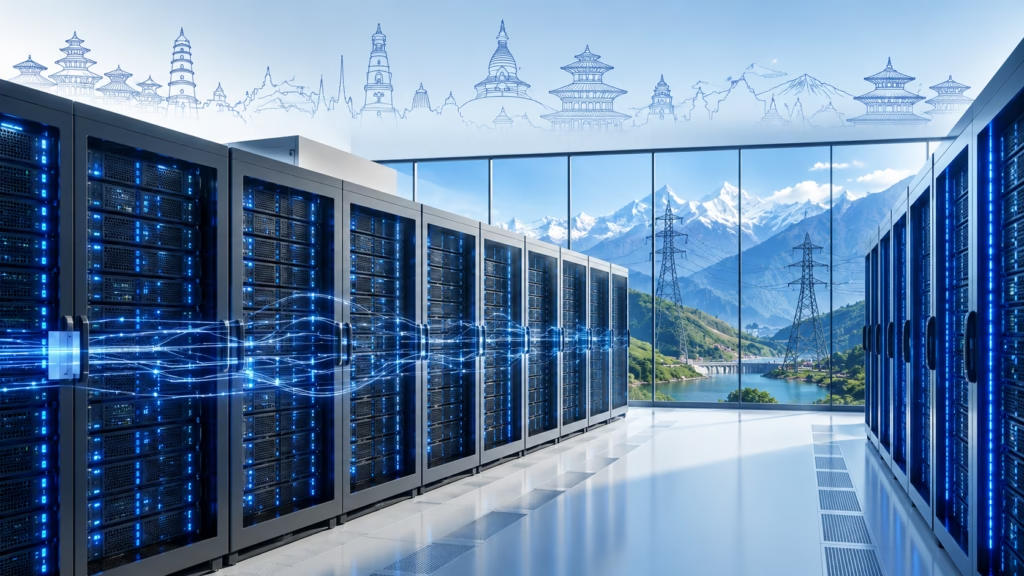
During the FY 2083/84 budget speech, Finance Minister Dr. Swarnim Wagle announced that the country’s first “sovereign AI compute centre” will be established in Syuchatar, Kathmandu, with the government purchasing thousands of AI processing units to provide subsidised compute capacity to AI entrepreneurs and startups.
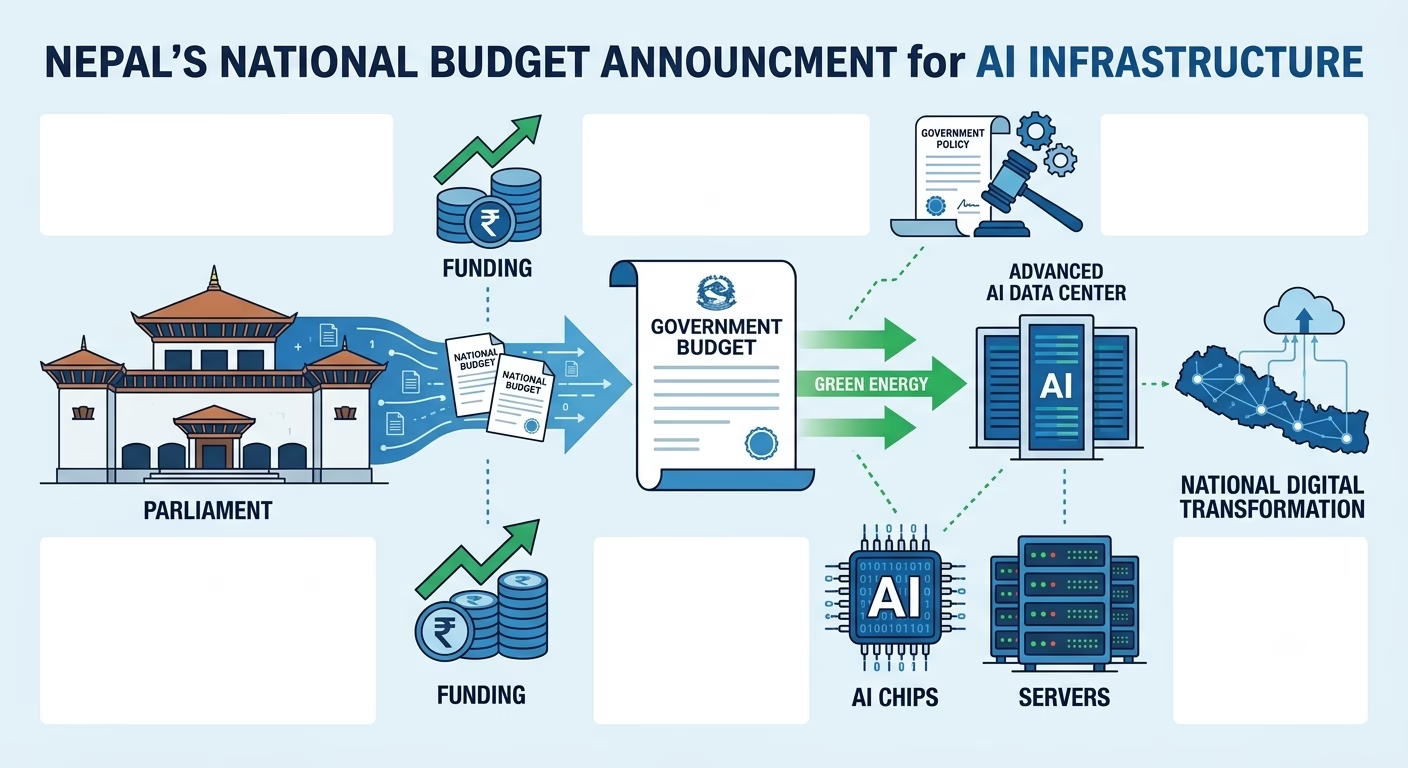
In simple terms: the government wants to buy a large batch of GPUs (the specialized chips that power AI training and inference) and make that computing power available to Nepali startups and researchers at a discounted rate, instead of everyone renting compute from foreign cloud providers.
Wagle also proposed converting Nepal’s clean hydroelectric energy into high-value AI compute services essentially arguing that Nepal’s underused hydropower capacity could become the fuel behind a domestic AI industry, generating skilled jobs and digital exports in the process.
As part of the same push, the government also announced it will invite at least 15 internationally recognized Nepali AI experts to return home in the upcoming fiscal year through a dedicated fellowship program.
Why Syuchatar specifically?
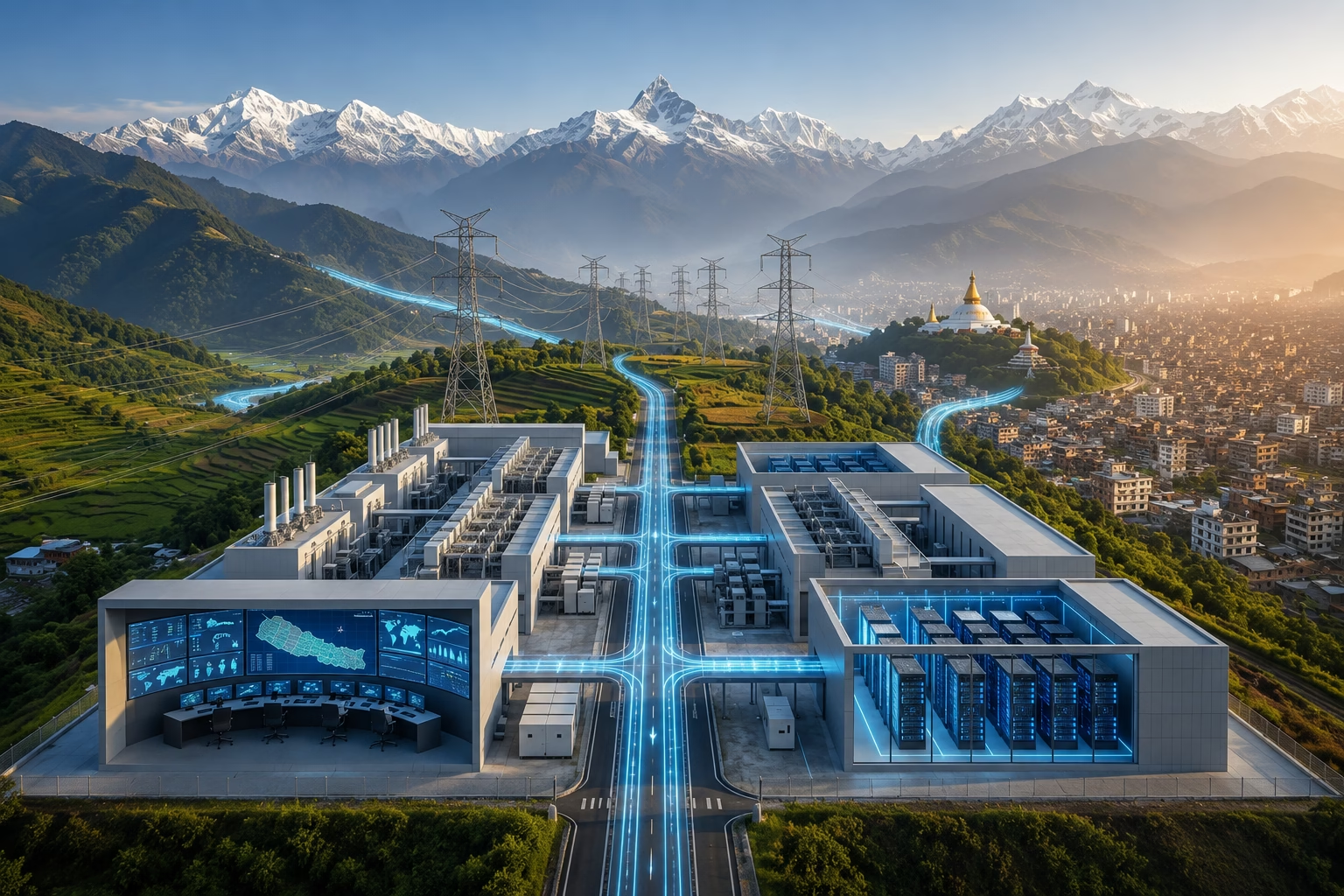
The site choice isn’t random. Syuchatar already houses the Nepal Electricity Authority’s Load Dispatch Center the operational core of the national grid along with significant transmission infrastructure. A high-density GPU facility needs reliable, redundant power close by, and co-locating with existing NEA infrastructure solves one of the biggest physical challenges of building a data center in the Kathmandu Valley.
The location also sits adjacent to Singha Durbar, the seat of government, which allows for close bureaucratic oversight and secure physical access, and is near major network nodes managed by Nepal Telecom.
What’s confirmed vs. what’s still undecided
This is the part that matters most if you’re trying to plan around this announcement rather than just react to the headlines.
Confirmed:
- Location: Syuchatar, Kathmandu
- Core concept: government-purchased GPUs, offered to startups/entrepreneurs at subsidized rates
- Power source: framed around hydropower
- A parallel fellowship program to bring back 15 Nepali AI researchers
Still undecided (as of this writing):
The budget committed the government to the Sovereign AI Compute Center in just two clauses, with no technical specification, no line-item budget allocation, no timeline, and no named operator disclosed. That means the scale of the facility, the exact GPU count and generation, who will run it day-to-day, and when it will actually go live are all open questions.
Even the physical footprint isn’t locked down. Around Syuchatar, local officials have said it’s premature to comment on the project’s impact since the exact location of the data center within the area remains unconfirmed.
The debate: is this the right call?
Not everyone is convinced this should be a government-built facility. Data centers are resource-intensive, and critics have raised two main concerns:
Water. Cooling a data center can consume roughly 1.14 million liters of water daily enough to supply thousands of households which is a serious concern for a valley already dealing with drinking water shortages.
Power reliability. Some engineers argue that if every household in Nepal ran its domestic appliances simultaneously, the national grid would already struggle to cope, raising doubts about whether the country’s power infrastructure can sustainably support a large AI data center on top of everyday demand.
On the other side, comparative policy analysis has pointed out that frontier AI hardware depreciates quickly, meaning the GPU generation Nepal buys in 2026 will be noticeably less competitive by 2028, and running a sovereign facility is a recurring operating cost, not a one-time purchase power, cooling, replacement parts, and a skilled operations team all add up year after year.
How does Nepal compare to its neighbors?
Nepal isn’t the first country in the region to wrestle with this question, and the different approaches taken elsewhere are worth knowing:
- India took a hybrid approach: rather than building a single state-owned facility, the IndiaAI Mission empanelled private GPU providers and subsidized access to their compute for startups, academia, and government use, buying compute hours instead of taking on construction risk.
- Sri Lanka has gone smaller and research-focused, building modest research-grade GPU capacity rather than a full national facility.
- Bhutan has deliberately chosen not to build sovereign AI compute at all, judging that commercial cloud options already meet its needs at its current scale.
A twist: the private sector moved first
Here’s where the story gets interesting. On July 3, 2026, a private company, DataHub, launched YetiCloud.AI at a Kathmandu event, billing it as Nepal’s first GPU-as-a-service platform and government representatives sat on the launch panel rather than staying on the sidelines.
That matters because it raises a genuinely open question for anyone building an AI product in Nepal right now: will the Syuchatar center end up complementing private GPU providers like this one (the way India’s model works), or will the two efforts end up competing for the same startups and the same limited pool of subsidized compute? Whether the eventual project documents acknowledge this new domestic private capacity and design the public facility around gaps the market doesn’t already fill will say a lot about which direction Nepal is headed.
What this means if you run a startup or dev shop in Nepal
For now, there’s nothing to apply for and no released timeline, so the practical move is to watch, not wait. A few things worth keeping an eye on over the coming months:
- Any published technical specification, procurement document, or governance charter for the Syuchatar center
- Whether a named operator or agency is confirmed
- Pricing and access details from private alternatives like YetiCloud.AI, which may become available sooner
- Progress on the 15-fellowship AI researcher program, which could shape who ends up building on top of this infrastructure
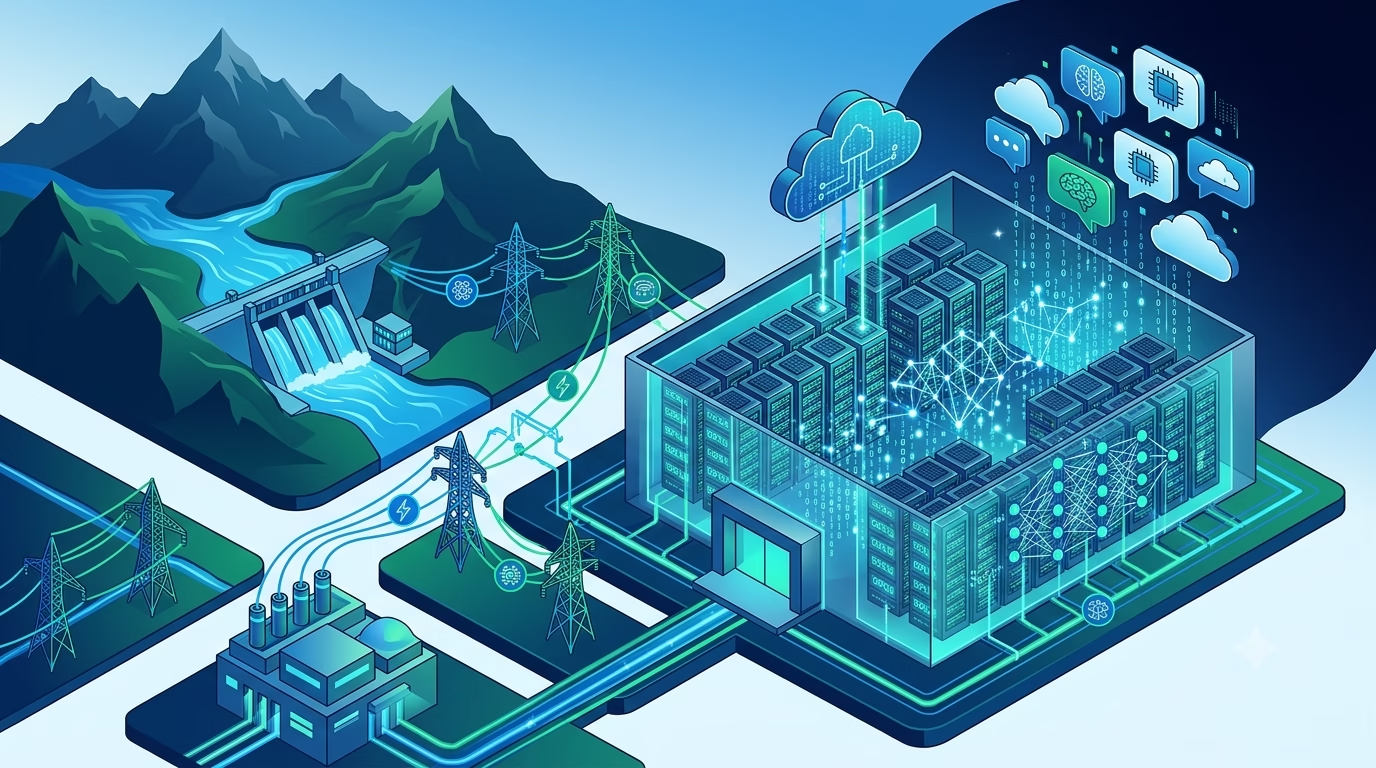
Nepal’s Sovereign AI Compute Center is a genuinely ambitious idea cheap hydropower turned into subsidized AI infrastructure for local startups is a compelling pitch. But right now it’s still largely a budget-speech promise rather than a funded, scoped project. The location makes technical sense given existing NEA infrastructure, and the intent is clearly there. What’s missing is the detail: the budget, the timeline, the operator, and how it’ll coexist with the private GPU providers who are already moving. We’ll be tracking this story as more details emerge.
This post is based on reporting from Nepal’s national budget speech (FY 2083/84), TechSansar.com’s ongoing coverage of the Syuchatar project, and English coverage from Nepal News, Fiscal Nepal, NEPSE Trading, and Ratopati.