
Current Research Projects & Technology Directions Leading Into 2026
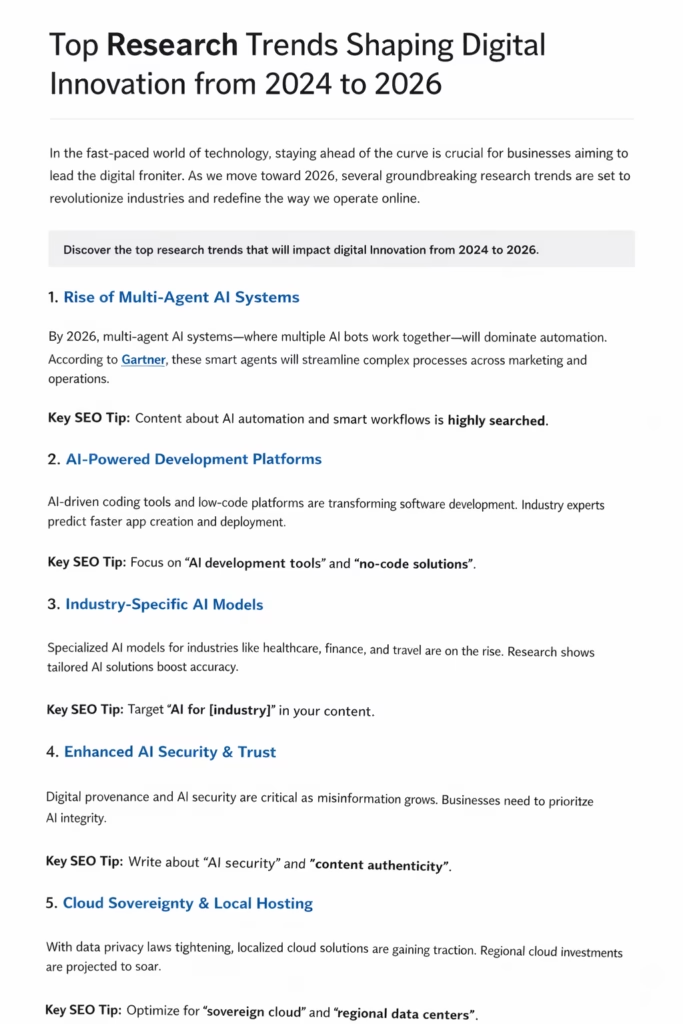
Technology is moving faster than ever, and the period leading up to 2026 is shaping up to be one of the most transformative phases for digital businesses. Across AI, automation, cybersecurity, cloud infrastructure, and digital marketing, research and real-world adoption are converging to redefine how companies build products and connect with users.
At Sarbatra’s innovation labs, we closely study emerging technologies and ongoing global research trends to align our platforms with what businesses will need next. Below is an overview of the most important research directions currently shaping the industry through 2026.
1️⃣ Agentic AI and Multi-Agent Systems
One of the most discussed research areas going into 2026 is the shift from single AI assistants to multi-agent systems — networks of AI agents that collaborate to complete complex workflows.
According to research presented by Gartner, multi-agent systems are expected to become a key strategic technology trend, enabling organizations to automate workflows that previously required multiple tools or teams.
Why this matters for businesses:
-
Automation beyond simple chatbots
-
Workflow orchestration across marketing, sales, and operations
-
Reduced operational bottlenecks
At Sarbatra, this aligns with research into smarter automation platforms that can coordinate tasks across marketing systems, analytics tools, and user engagement workflows.
2️⃣ AI-Native Development Platforms
Another major shift is AI-native software development — platforms where AI assists developers in designing, building, and deploying applications faster than traditional workflows.
Global analysts predict that AI-assisted development will dramatically reduce time-to-market while enabling smaller teams to build larger systems.
Research focus areas include:
-
AI-assisted coding and testing
-
Low-code and no-code integrations
-
Automated UI/UX suggestions
-
Intelligent debugging and optimization
For digital agencies and SaaS providers, this means faster feature releases and more scalable products.
3️⃣ Domain-Specific AI Models (Industry-Focused Intelligence)
Generic AI models are powerful but often lack context for specific industries. Research is moving toward domain-specific language models, which are trained with specialized knowledge for areas such as marketing, tourism, finance, and governance.
Expected benefits by 2026:
-
Higher accuracy for business workflows
-
Better compliance with local contexts
-
Lower operational costs compared to general models
This trend opens opportunities for localized innovation, particularly in emerging digital markets like Nepal where language and cultural understanding are critical.
4️⃣ AI Security, Trust & Digital Provenance
As AI-generated content grows, trust and verification become essential. Research is strongly focused on:
-
AI security platforms
-
Digital provenance (tracking origin of digital assets)
-
Content authenticity verification
Experts emphasize that protecting data and verifying digital assets will become a major competitive advantage.
For marketing and media platforms, this means stronger safeguards against misuse and better transparency for users.
5️⃣ Cloud Evolution & Digital Sovereignty
Research also indicates a strong movement toward regional or sovereign cloud infrastructure due to privacy, regulatory, and geopolitical concerns.
Forecasts show strong growth in localized cloud spending through 2026–2027, especially for government and regulated sectors.
Key impacts include:
-
Increased demand for secure regional hosting
-
Hybrid cloud architectures
-
Better compliance for sensitive data
Businesses building scalable systems today should prepare for flexible infrastructure that can adapt to regional requirements.
6️⃣ Physical AI and Real-World Automation
AI is no longer limited to software interfaces. Research trends show growth in physical AI, where intelligent systems interact with real-world environments through devices, sensors, and automation platforms.
This area includes:
-
Smart tourism systems
-
Automated media production workflows
-
Event and campaign automation
-
IoT-powered analytics
7️⃣ Infrastructure Challenges & Scalability Research
Academic studies indicate that AI growth may significantly increase infrastructure demands in coming years, requiring smarter optimization and distributed systems.
Research priorities include:
-
Edge computing
-
Efficient AI inference
-
Reduced energy consumption
-
Distributed architectures
This reinforces the importance of building modular systems that scale efficiently during high-traffic periods — especially relevant for campaign-driven platforms and public engagement tools.
🚀 How These Research Directions Influence Sarbatra’s Vision
Based on current global research and industry trends, several clear priorities emerge:
-
Smarter automation powered by AI agents
-
Scalable platforms ready for high traffic events
-
Secure and trustworthy digital ecosystems
-
Localized intelligence for regional audiences
-
Cloud-flexible architectures for future compliance
The goal is not just adopting technology — but creating systems that help businesses, organizations, and communities engage digitally in smarter and more meaningful ways.
🔮 Looking Ahead to 2026
By 2026, we expect a major shift from isolated digital tools toward connected intelligent ecosystems where AI, automation, analytics, and human creativity work together.
Companies that invest early in scalable digital infrastructure and practical AI integration will be better positioned to grow, adapt, and lead.
At Sarbatra, ongoing research and experimentation continue to guide our roadmap as we build products designed for the next generation of digital transformation.